

The decision to elope is rarely the hard part. Most couples arrive at it with clarity and relief: this is how we want to get married. The hard part is the conversation that comes next.
Telling your family you’re not having a traditional wedding can feel loaded. There’s the parent who’s been imagining walking you down the aisle. The grandparent who assumes a church ceremony. The sibling who already started planning a toast. Eloping is not about rejecting those people. But it can feel that way to them if you don’t handle the conversation with intention.
This is a guide for having that conversation well and, if you want, for finding ways to bring your family into the experience without compromising what makes an elopement yours.
Decide When to Tell Them
There are two schools of thought, and neither is wrong.
Telling your family before you elope gives them time to process, ask questions, and potentially participate in some way. If your family is generally supportive but may need a moment to adjust their expectations, telling them in advance is usually the smoother path. It also prevents the specific sting of finding out after the fact, which some family members experience as being deliberately excluded.
Telling them after works when you know the conversation will create pressure, guilt, or conflict that will overshadow your planning and your day. Some family dynamics are such that advance notice becomes an invitation to negotiate, and an elopement is not a negotiation. If telling them beforehand means spending the next three months defending your decision instead of enjoying the anticipation, it is completely reasonable to share the news once it’s done.
A useful question to ask yourself: will telling them in advance allow me to be fully present on my elopement day, or will it create noise that follows me there?
How to Have the Conversation

Do it in person or over video call. Not by text. This is not about formality; it’s about letting the people who love you hear your voice and see your face when you share something that matters. Text strips out tone, and tone is everything here.
Lead with your reasons, not the logistics. Don’t open with “we’re not having a wedding.” Open with why you’re choosing what you’re choosing. Talk about what drew you to an elopement: the intimacy, the adventure, the desire to make the day about your commitment to each other without the weight of a production. When people understand your motivation, they’re far more likely to respect the decision even if it’s not what they pictured.
Be direct and confident. An elopement is not something you need to apologize for. If you present it tentatively, as though you’re asking permission, it invites pushback. You’re sharing a decision you’ve made together as a couple, not opening a discussion for input.
Expect a range of reactions. Some family members will be immediately supportive. Some will need time. A few may be hurt. All of these reactions are valid, and none of them mean you made the wrong choice. Give people space to feel what they feel without absorbing it as evidence that you’ve done something wrong.
What to Say When They Push Back
If someone says: “But I always imagined being there when you got married.”
Acknowledge it. That feeling is real. Then redirect: “I know, and it means so much that you want to be there. We’ve decided this is how we want to start our marriage, but we absolutely want to celebrate with you. Let’s plan something together after.”
If someone says: “Weddings are about family.”
They’re not wrong. But a marriage is about the two people entering it. You can honor both things. An elopement is the ceremony; a celebration with family is the party. They don’t have to be the same event to both be meaningful.
If someone says: “Are you ashamed of us?”
This one cuts, but it’s usually fear talking, not logic. Be gentle and clear: “This has nothing to do with keeping anyone away. It’s about creating an experience that feels right for us as a couple. You are important to us, and we want you to feel that.”
Ways to Involve Your Family Without Changing Your Plans
Eloping doesn’t mean excluding people. It means choosing the scale and shape of your day. There are real, meaningful ways to bring your family into the experience without turning it into something it’s not.
Ask them to write letters. Read them to each other on your elopement day, at the ceremony site or over a private dinner that evening. This is one of the most emotionally powerful ways to include family. The letters become part of the experience without anyone needing to be physically present.
Livestream the ceremony. A simple video call lets family watch in real time. It’s not the same as being there, and it doesn’t pretend to be. But it gives them a window into your moment, and that goes a long way.
Involve them in the planning. Let your mom help you choose your outfit. Go ring shopping with your dad. Ask a sibling to help you pick flowers. These gestures take nothing away from the intimacy of your elopement and give your family a role in the story.
Host a celebration after. This can be anything: a backyard dinner, a restaurant reservation, a weekend getaway with your closest people. Share your photos, tell the story of your day, and let them celebrate with you. Many couples say the post-elopement gathering ends up being more relaxed and joyful than a traditional reception because all the pressure is gone.
Invite one or two people. An elopement does not have to mean just the two of you. If having your parents or your best friend there would make the day more meaningful, invite them. There are no rules here. The point is that you choose who’s there, rather than obligation choosing for you.
If You’re Telling Them After
Make it personal. Call or visit the people who matter most to you. Don’t let them find out through social media. The sequence matters: closest family first, then friends, then everyone else.
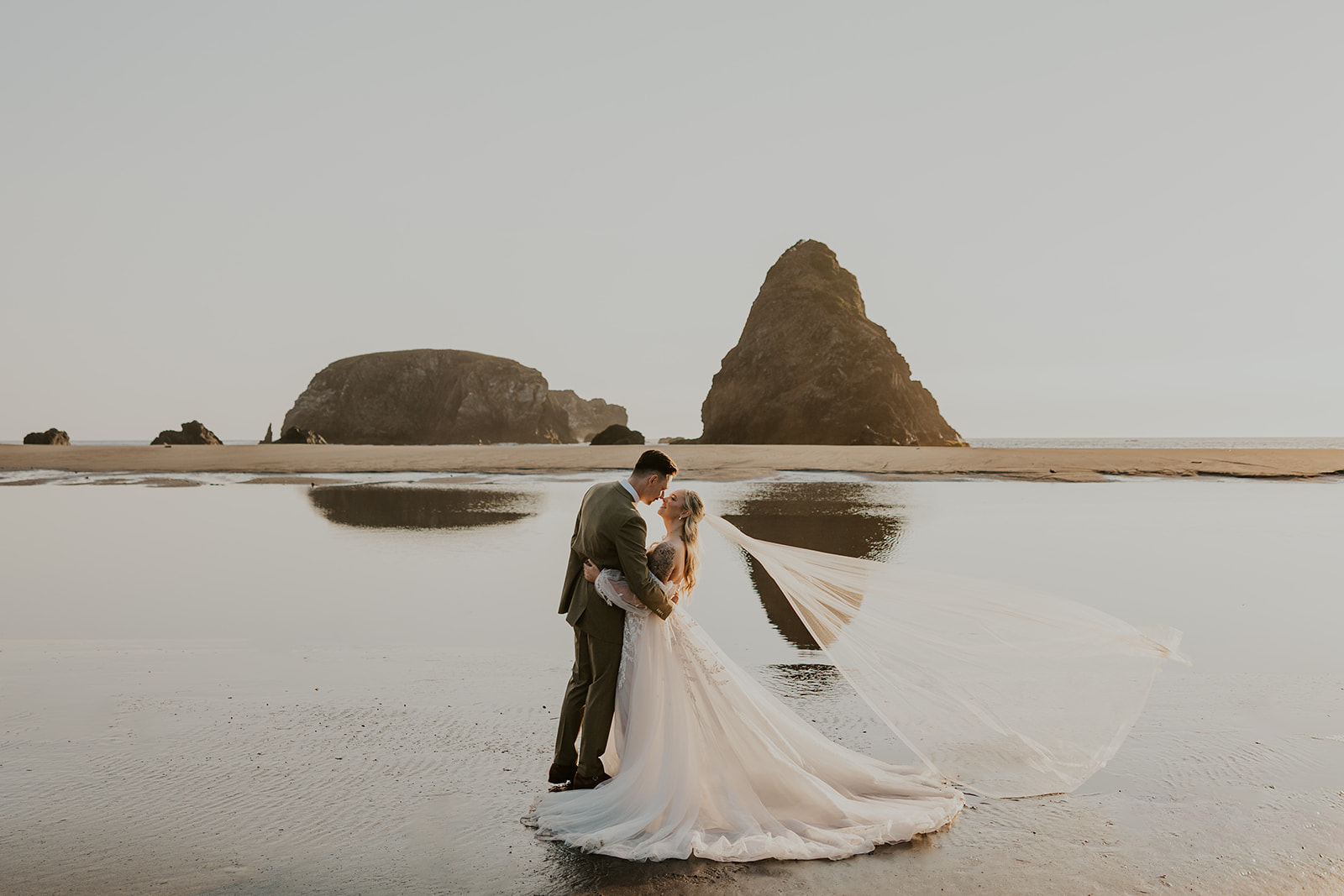
Share your photos. Stunning images from your elopement day do something that words alone can’t: they let your family see your joy. When they see how happy you look standing on a cliff edge at golden hour, the conversation shifts from “why weren’t we invited” to “this is incredible.” Good photography is not just documentation. It’s the bridge between your private experience and the people who love you.
Give them something to look forward to. Announce the elopement and the celebration in the same breath: “We got married last weekend in Olympic National Park, and we’re hosting a dinner next month so we can celebrate with all of you.” This reframes the news from something they missed to something they’re invited to.
The Bigger Picture

An elopement is not a lesser wedding. It is a deliberate choice to build your marriage around what matters to you as a couple rather than around tradition, obligation, or the expectations of others. That choice takes clarity and, sometimes, courage.
The people who love you will come around. They may need a moment. They may need to see the photos. They may need the celebration dinner to feel included. But the couples who elope almost universally say the same thing: they would not have done it any other way.
Your wedding day should feel like yours. Start there, and the rest follows.
Planning your elopement? Elope Atlas helps you research locations, understand permits, and find vendors who specialize in intimate ceremonies. Start exploring